A living canopy can hide a hollow trunk
A tree can remain alive with a hollow trunk because its water- and nutrient-conducting tissues lie nearer the outside.
Read the source →
Our Services
Removal of dead, damaged, or unwanted trees, planned around site access, nearby structures, and your cleanup requirements.
A COMPLETE REMOVAL PLAN
Tree removal may be appropriate when a tree is dead, badly damaged, conflicts with a planned use of the property, or cannot remain safely in its current location.
We assess the tree’s size and condition, the space available, and the surrounding property to plan the removal. Access, nearby buildings, and debris handling are discussed as part of the estimate.
Before work begins, we look at the tree and the property around it. An open-area removal requires a different approach from a tree close to a house, outbuilding, road, or other property feature.
Where the crew and equipment can reach the tree affects the practical approach and time on site.
Buildings, fences, landscaping, and other features influence how the removal is planned.
We discuss what debris should be removed so cleanup is part of the estimate from the start.
Size, visible damage, and the tree’s position help determine the work involved.
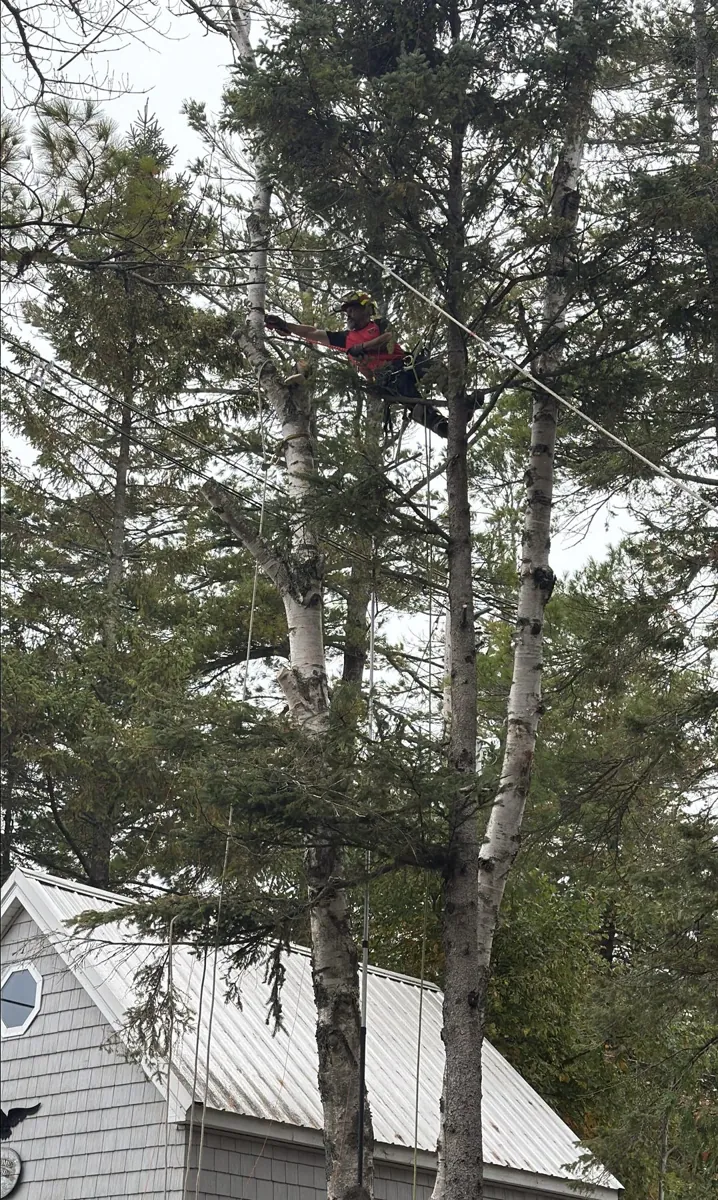
Tell us where the tree is, what is nearby, and what you want done with the brush and debris. Photos taken from a safe distance can help explain the job before we visit.
A closer look
A tree can remain alive with a hollow trunk because its water- and nutrient-conducting tissues lie nearer the outside.
Read the source →Standing dead trees can provide wildlife habitat where they do not threaten people or property.
Read the source →Construction, changes in soil level, and root disturbance can affect a tree long after the original work.
Read the source →Contact us with your property location and the tree work you need. We’ll discuss the scope and arrange a free estimate.
Request a Free Estimate →